Minneapolis (612) 323-9160
Xtreme Wash Systems
Motor Wash in Dayton

Minneapolis Local

Motor Wash in Dayton

Minneapolis-based wash pros serving Dayton with 50+ years of hands-on car washing experience.

Request an estimate

Tell us what you need

No obligation


By submitting this form you agree that we may contact you about your request and share your name and email address with partner companies for email marketing. We never share your mobile number or text message consent with third parties or affiliates for marketing or promotional purposes.

★★★★★
“The car washes they service are great places to get your cars cleaned. …”
Alyssa J. · Google review

Car Wash Dayton Drivers Actually Rely On

Motor Wash in Dayton is what Xtreme Wash Systems has been delivering from our Minneapolis location at 5301 Douglas Dr N, just a short drive from Dayton's residential neighborhoods. With 50+ years of car washing experience and a 4.3-star rating on Google, we're not a franchise operation running a corporate script. Call (612) 323-9160 and you're talking to people who know wash equipment from the inside out.

Dayton's water hardness sits at 25 grains per gallon, sourced from municipal wells and supplemented by interconnections with neighboring cities. That's hard water by any measure, and it leaves mineral deposits on paint and glass if you're not washing consistently. The soils here are silty and clayey glaciolacustrine deposits that drain poorly, meaning every rain and every winter thaw kicks up more road grime than drivers in sandier areas deal with. Add road salt from November through March and you've got a vehicle that needs regular washing to protect the finish. Our motor wash service is built around exactly these conditions.

Why Dayton Roads Demand Regular Washing

Local soil and water conditions make skipping washes a bad call for your vehicle's finish.
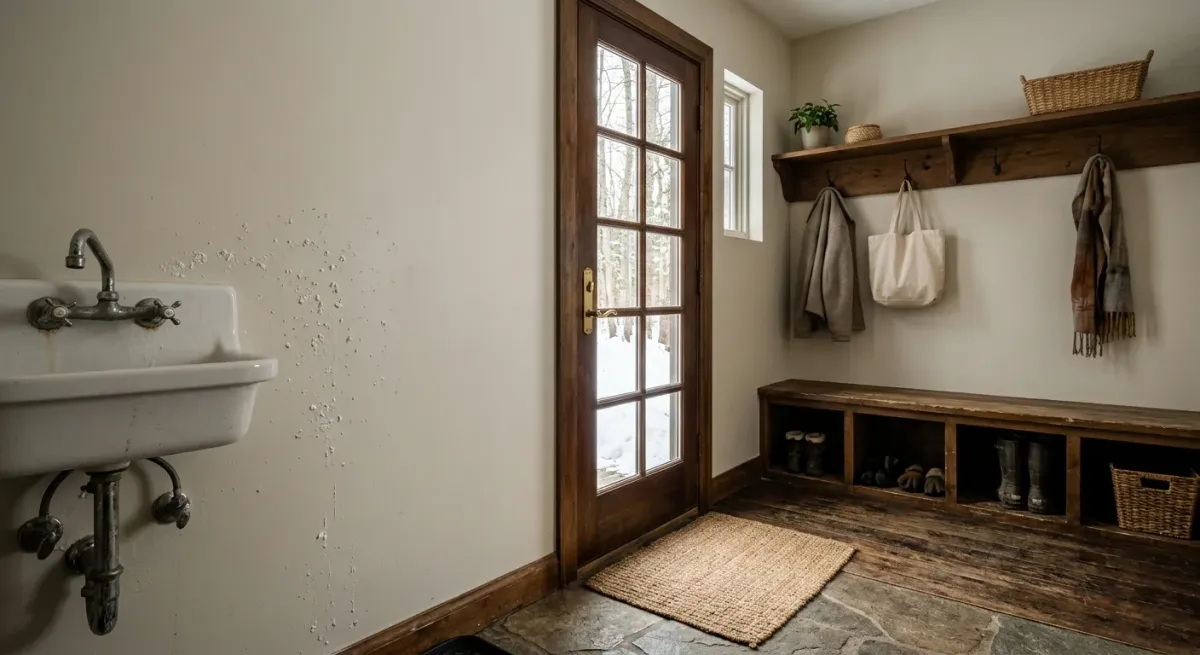
Dayton's poorly drained glacial soils don't just sit under your tires. They coat your rocker panels, wheel wells, and undercarriage every time you leave a gravel driveway or a muddy shoulder. Most vehicles in this area accumulate a visible film after a single week of driving during spring thaw. That's not an exaggeration. The silty clay here sticks, and it holds moisture against bare metal longer than sandy soils would. Combined with the road salt that Minnesota crews apply through winter, the undercarriage on a vehicle that doesn't get washed regularly takes a beating that shows up as rust long before it should. Washing at least every two weeks during winter and after any significant rain keeps that process from getting ahead of you. Our facility handles everything from sedans to larger personal vehicles, and we know what it takes to pull road salt and clay-laden grime off a vehicle properly. Neighbors in Spring Lake Park and East Bethel deal with similar conditions, and the same logic applies.
mineral spotting on paint work, illustration in Dayton, MN

Hard Water Reality

25 GPG Water Hardness and What It Does to Your Car

Dayton's well-sourced water is among the harder supplies in the metro, and it shows on paint.

Mineral Spotting on Paint

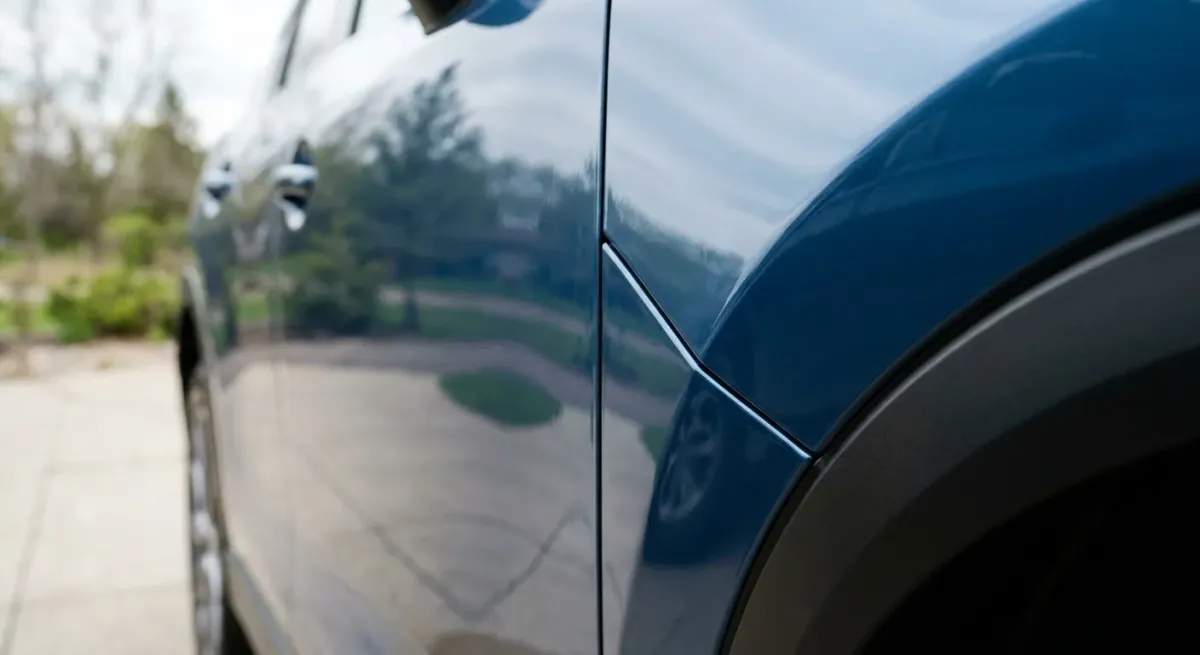
At 25 grains per gallon, Dayton's water leaves calcium and magnesium deposits when it dries on a surface. Those white spots on a dark-colored car after a rinse aren't dirt. They're minerals. A proper wash cycle removes them before they etch into the clear coat.

Glass and Mirror Buildup

Hard water residue on windshields creates a hazy film that diffuses oncoming headlights at night. Regular washing keeps glass clearer and safer. If you're seeing a rainbow glare on your windshield, that's mineral buildup, not a defect in the glass.

Wheel and Trim Deposits

Alloy wheels are especially prone to hard water staining because brake dust bonds with mineral residue. Consistent washing removes both before the combination creates pitting on the wheel finish.

Iron and Manganese in Northeast Dayton

The City of Dayton's new Wellhead Water Treatment Plant addresses iron and manganese in the northeast supply. Those minerals can leave orange or brown staining on vehicles if water sits on the surface. Fresh wash water and proper drying steps counter this.

Soft-Touch vs. Touchless: Which Is Right for Your Vehicle
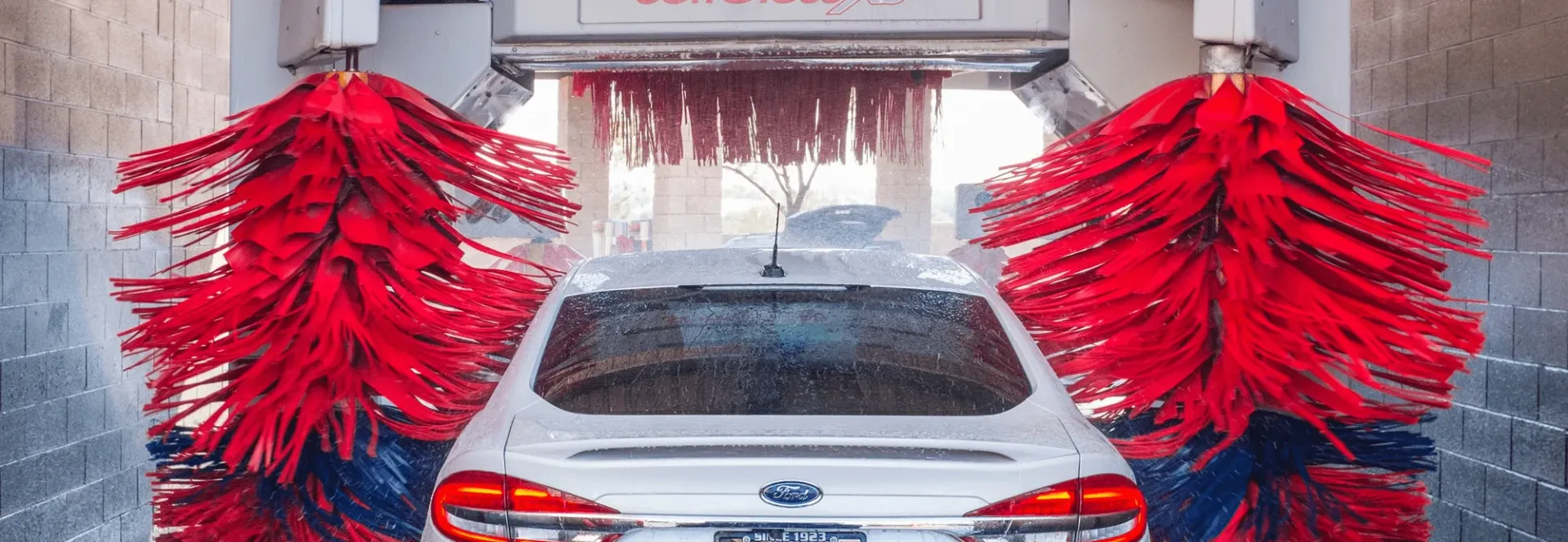
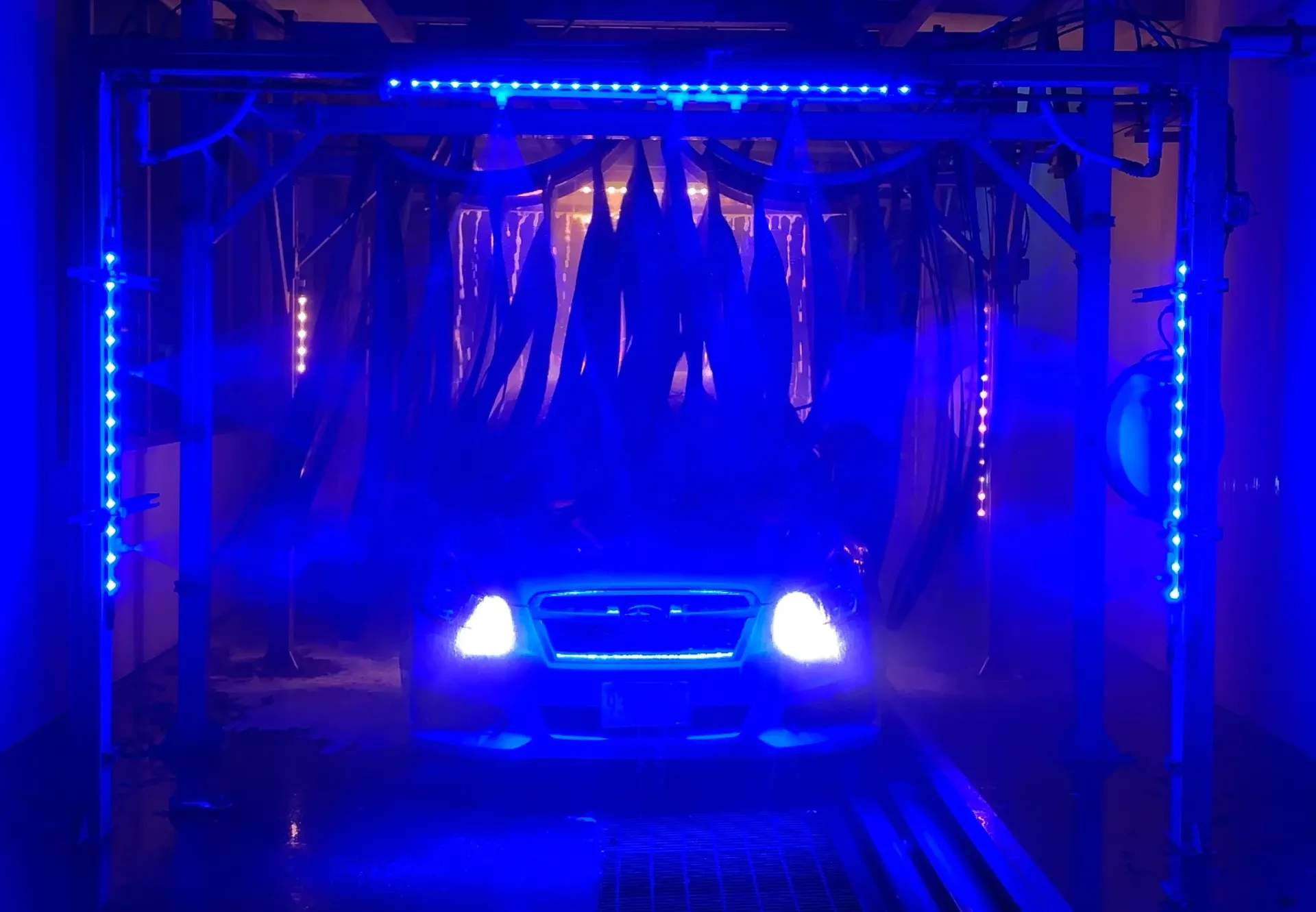
Drivers often ask about this, and the answer depends on your vehicle, not on which option costs more. Touchless washing uses high-pressure water and chemical solutions with no physical contact. It's the right choice for vehicles with aftermarket wraps, fresh paint, or a finish that's already showing micro-scratches. The limitation is that touchless systems can't remove baked-on road grime or heavy clay deposits as completely as a contact wash. Soft-touch washing uses foam-tipped cloth media or brush strips that make gentle contact with the surface. On a well-maintained paint job it cleans more thoroughly than touchless for the type of grime Dayton roads produce. Neither method is universally better. If your clear coat is compromised or you've got a custom finish, go touchless. If you want the most complete clean on a standard factory paint job, soft-touch gets there faster. We can talk through which approach fits your vehicle when you call or visit. For operators running a wash facility who want to understand equipment differences, our sales and installation team can walk through the specs.
glass and mirror buildup work, illustration in Dayton, MN

Service Options

What a Visit to Xtreme Wash Systems Covers

We handle more than a standard tunnel wash. Here's what's available on-site.

  • Car Wash Sales and Installation in Minneapolis

    Equipment Sales and Installation

    If you're an operator looking to launch a wash facility in the region, we've been doing equipment installation for 20 years across Minnesota, Wisconsin, North Dakota, South Dakota, and Iowa. That's a different conversation, and we're ready for it.
How Often Should You Wash in This Climate

There's no universal answer, but Dayton's conditions narrow it down considerably.

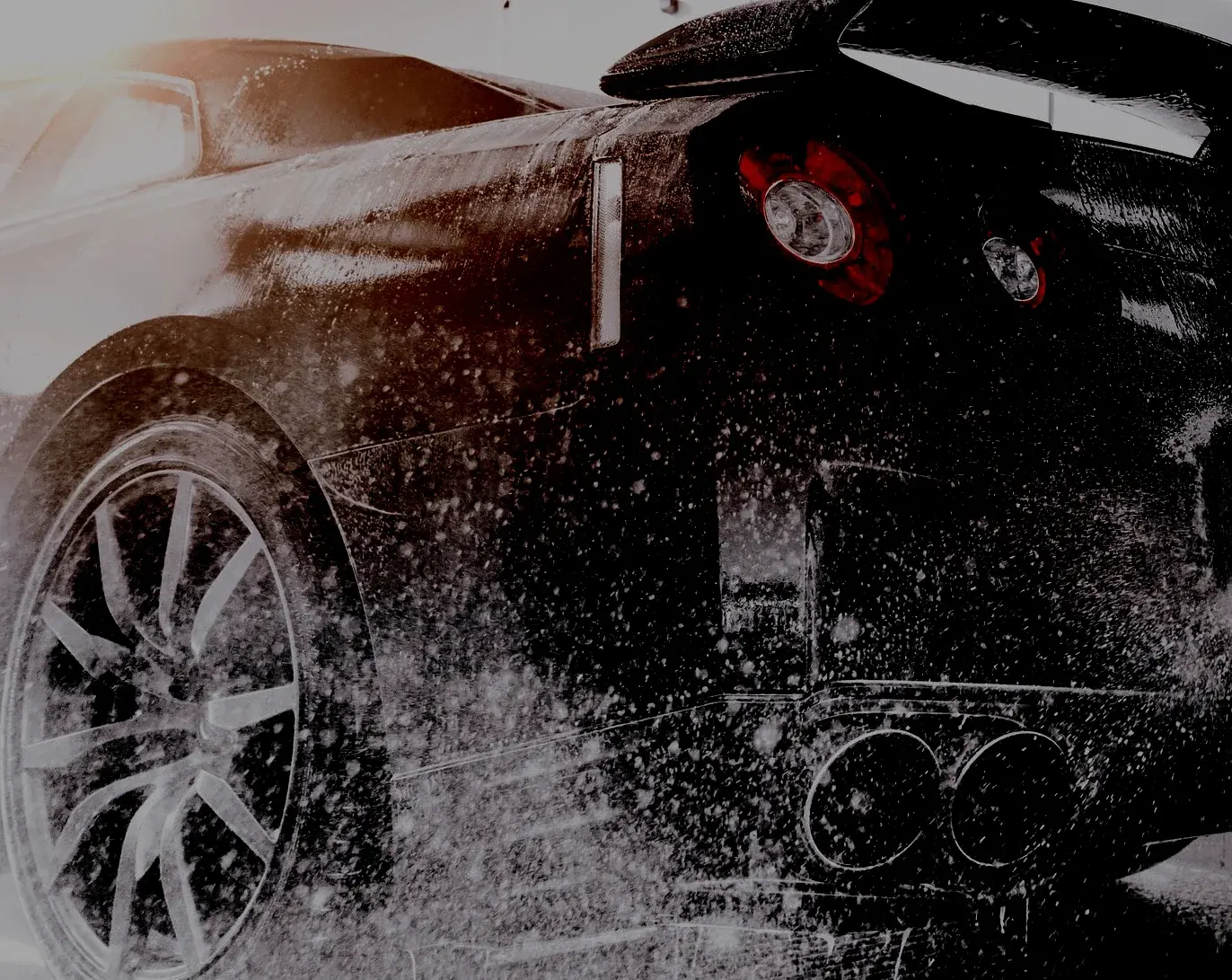
Most vehicle manufacturers recommend washing every two weeks as a baseline. In Dayton, that recommendation becomes a floor, not a ceiling, during winter months. Road salt application starts in November and runs through March in most years. Salt that sits on painted surfaces, in wheel wells, and on the undercarriage for more than a week starts working on metal. Every wash during that window is preventive maintenance, not a luxury.
Every 1 to 2 weeks during winter salt season
Road salt is the biggest threat to vehicle finish and undercarriage integrity in Minnesota.
After any significant mud or flooding event
Dayton's flood plain areas and poorly drained soils mean post-rain grime is heavier than in drier regions.
Monthly at minimum during dry summer months
Dust, UV exposure, and tree sap accumulate. Hard water from summer rain dries and spots without a rinse.
Before any wax or paint protection application
Wax applied over mineral deposits or road film bonds poorly and wears off faster.

Ready to Get Your Car Clean in Dayton?

Call or visit us at 5301 Douglas Dr N, Minneapolis. We don't run a call center. You reach the people who run the wash.

Frequently asked questions

How often should I wash my car given Dayton's road and weather conditions?
During winter, every one to two weeks is the right cadence. Dayton roads get heavy salt treatment, and Dayton's clay-heavy soils mean mud and grime accumulate faster than in sandier areas. Salt sitting on painted surfaces and metal components for more than a week starts doing damage. In summer, monthly washing keeps mineral deposits from Dayton's 25 GPG hard water from etching into your clear coat. If you've driven through a flooded low-lying area near the Mississippi River flood plain, wash as soon as possible after.
What is the least damaging way to wash my car?
Touchless washing with high-pressure water and a quality chemical solution produces zero physical contact, making it the safest option for vehicles with custom paint, wraps, or already-damaged clear coat. For vehicles with standard factory paint in good condition, a soft-touch foam-media wash is thorough enough to remove road salt and clay deposits without harming the finish when the equipment is properly maintained. The most damage usually comes from worn or dirty brushes at poorly maintained facilities, not from the washing method itself.
Is it cheaper to wash my car at home or use a car wash in Dayton?
The math on home washing changes when you factor in water cost, soap, equipment, and your time. Dayton's water hardness at 25 GPG also means home rinsing often leaves mineral spots unless you're using a softened water source or a spot-free rinse agent. A professional wash uses calibrated chemical ratios and rinse systems designed for hard water conditions. For drivers who wash frequently during winter, a professional wash is often more cost-effective per visit than maintaining home washing supplies. Every job is different. Contact Xtreme Wash Systems for current pricing details.
When should you skip a car wash?
Don't run a vehicle through a wash when the temperature is below freezing and the car will be parked outside immediately after. Water trapped in door seals, mirrors, and locks can freeze and cause damage or make doors hard to open. Also avoid washing right before a heavy rain if the goal is keeping the car clean, though washing away road salt before a storm is still worthwhile. If your vehicle has a fresh paint repair or bodywork done in the last 30 days, check with the body shop before running it through an automated wash.
Does Dayton's hard water affect car wash results?
Yes, noticeably. At 25 grains per gallon, Dayton's municipal water supply is hard enough to leave visible mineral deposits on paint, glass, and trim when water dries on the surface. A car wash facility that uses spot-free rinse systems in the final stage counteracts this by using deionized or softened water for the last rinse. If you're washing at home with tap water, drying the vehicle immediately after rinsing is the best way to prevent spotting. The City's Wellhead Treatment Plant addresses iron and manganese in northeast Dayton's supply, but hardness remains a factor across the water system.

Related

Next step

Tell us about the job

Your name, your number and what needs doing. A person from Xtreme Wash Systems gets back to you.

Rather talk now?(612) 323-9160

No obligation


By submitting this form you agree that we may contact you about your request and share your name and email address with partner companies for email marketing. We never share your mobile number or text message consent with third parties or affiliates for marketing or promotional purposes.